Seedance 2.0 for Cinema: Generative Video That Challenges Hollywood
While the tech sector gauges the impact of OpenAI’s announced sunsetting of Sora, a new model is already gaining ground in the generative video market. It is called Seedance 2.0, from ByteDance. This is not another text-to-video tool, but a system aimed at reducing time, cost, and complexity of audiovisual production while preserving visual consistency, creative control, and continuity of the final result — challenging the film industry and the operational language of contemporary communication.
Sora’s sunsetting
Sora’s arc should be read less as a market exit and more as the end of a product that was first and foremost symbolic. OpenAI has officially stated that the Sora web and app experience will shut down on 26 April 2026, while the API will be retired on 24 September 2026. Users have been advised to export content before those deadlines; after any final export window closes, data associated with use of the service will be permanently deleted.
OpenAI had presented Sora in December 2024 as a strategic shift in video generation, with a platform able to create content from text, images, and storyboards. At the same launch, however, the company also acknowledged limits: unrealistic physics, difficulty with complex actions, and costs still far from true scale accessibility.
A new phase for AI video
Sora cannot be dismissed as a simple service closure. It is a signal that the AI video market is entering a phase that is far less spectacular and far more concrete: impressing with a demo is no longer enough. Sustainability, reliability, continuity of use, and economic viability matter.
And although OpenAI is sunsetting Sora, it continues to present Sora 2 on its site as technology capable of generating video with “hyperreal motion and sound”, which makes the gap between technological promise and production consolidation even clearer.
Seedance 2.0 brings AI into the language of cinema
Seedance 2.0 does not merely “imagine” scenes; it tries to handle them with logic closer to directing than to simple generative automation. In its official presentation, ByteDance describes it as a new-generation model built on a multimodal architecture that integrates text, images, audio, and video in a single operating environment.
That is what sets it apart in the industry debate: Seedance is perceived not only as a creative tool, but as a platform aiming to enter the real production chain, compressing time, cost, and complexity of audiovisual delivery. It is no coincidence that its arrival has reignited debate in Hollywood over copyright, image control, and the redefinition of creative work.
Directorial control
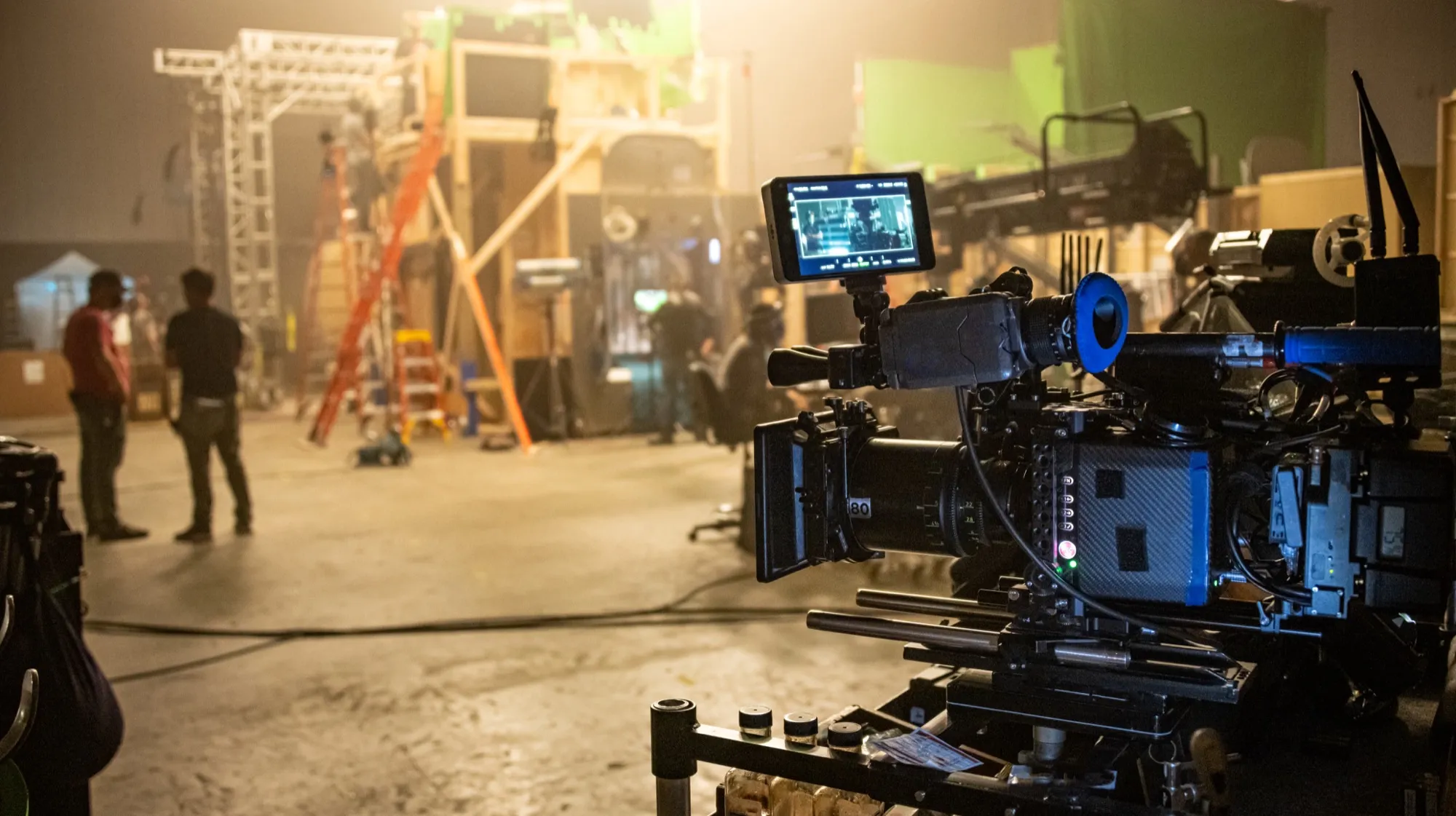
Seedance 2.0’s most visible leap concerns the relationship with the camera. In earlier models, camera movement was often unstable, approximate, and hard to control. Here it becomes a more governable element.
The system’s multimodal logic allows reference video to be used not only for style or action, but also to replicate camera moves, transitions, and visual construction of the scene — including complex movement, perspective changes, fluid tracking, and focus variation.
Seedance does not only generate moving images; it tries to build scenes with logic closer to traditional cinema. That is what makes it interesting for film and advertising: the ability to replicate a visual style and a directorial construction with a level of precision that generative video has until now achieved only intermittently.
Light, matter, and motion: the credibility challenge

One area where Seedance 2.0 appears to mark real progress is the physical credibility of the scene: not only image quality, but how bodies, objects, shadows, and light sources react to each other within the frame.
This is where many models have shown their clearest weakness: broken movement, inconsistent lighting, arbitrary shadows, and unnatural motion when scenes grow more complex. ByteDance emphasises physical accuracy and visual realism, especially in sequences with multiple subjects and simultaneous action — gravity, movement, and light coherence within the scene.
This is where generative video begins to approach a visual grammar usable for advertising, entertainment, and branded content.
Visual continuity across shots
The real industrial threshold is the ability to maintain narrative and visual coherence from one shot to the next. Seedance 2.0 tackles one of the clearest limits of generative video between 2024 and 2025: the inability to keep the same character, the same environment, and the same narrative logic across a sequence of multiple shots.
In earlier models, changing angle alone could alter a face, change a costume, remove an object, or distort the architecture of a space. ByteDance emphasises multi-shot consistency as a core element: building a scene no longer as a sum of successful fragments, but as a coherent sequence where subject identity, space, and continuity of action remain stable.
A credible competitor: Google and the photorealism of Veo 3
If Seedance 2.0 is drawing attention for its more directorial orientation and freedom with styles such as anime and sci-fi, Google Veo holds another flank of the competition: photographic realism.
Google DeepMind presents Veo 3 as a model designed to offer greater visual fidelity, stronger prompt adherence, and native synchronised audio — sound effects, ambient noise, and dialogue generated with the video, not added afterward.
The strategic difference is clear. Veo aims to make AI video more credible and ready for cinematic production processes like those Google is building with Flow. Seedance, by contrast, plays on high-impact synthetic creativity, especially where realism matters less than spectacle: stylised worlds, special effects, and blockbuster imaginaries that until recently required large budgets and highly complex technical pipelines.
Two models, two different promises: Veo on cinematic plausibility, Seedance on creative expansion and versatility.
From the garage to the big screen
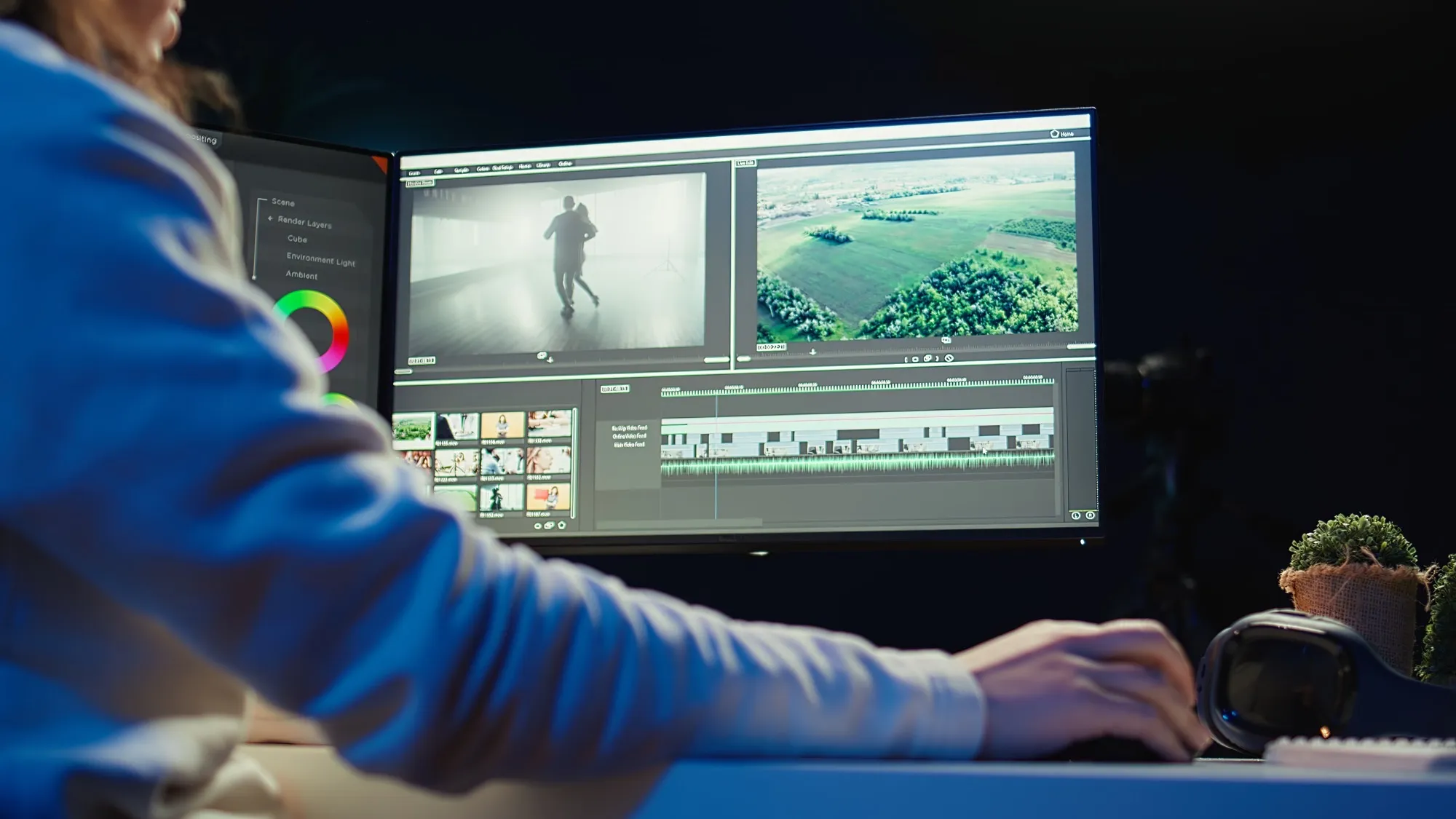
The real break introduced by Seedance 2.0 is not only the quality of the generated image, but the transformation of audiovisual production into a process that is more lightweight, modular, and accessible.
Until a few years ago, a credible science-fiction short, a high-level anime sequence, or a cyberpunk spot required visual design, animation, VFX, colour grading, audio, and weeks of post-production. Spectacular imagery was tightly bound to production infrastructure: without budget, there was no access.
With new generative video models, that hierarchy is starting to crack. What emerges is not only a new creative tool, but a new way to produce content: prompts, visual references, art direction, and rapid iteration become part of an operational grammar that can compress time, cost, and technical dependencies.
It is the logic of productions conceived from the start to be developed inside AI environments, not merely touched up by artificial intelligence at the final stage.
The end of traditional cinema, or only of dependence on big budgets?
The more accurate question today is not whether Hollywood is dying, but which Hollywood is meant to survive.
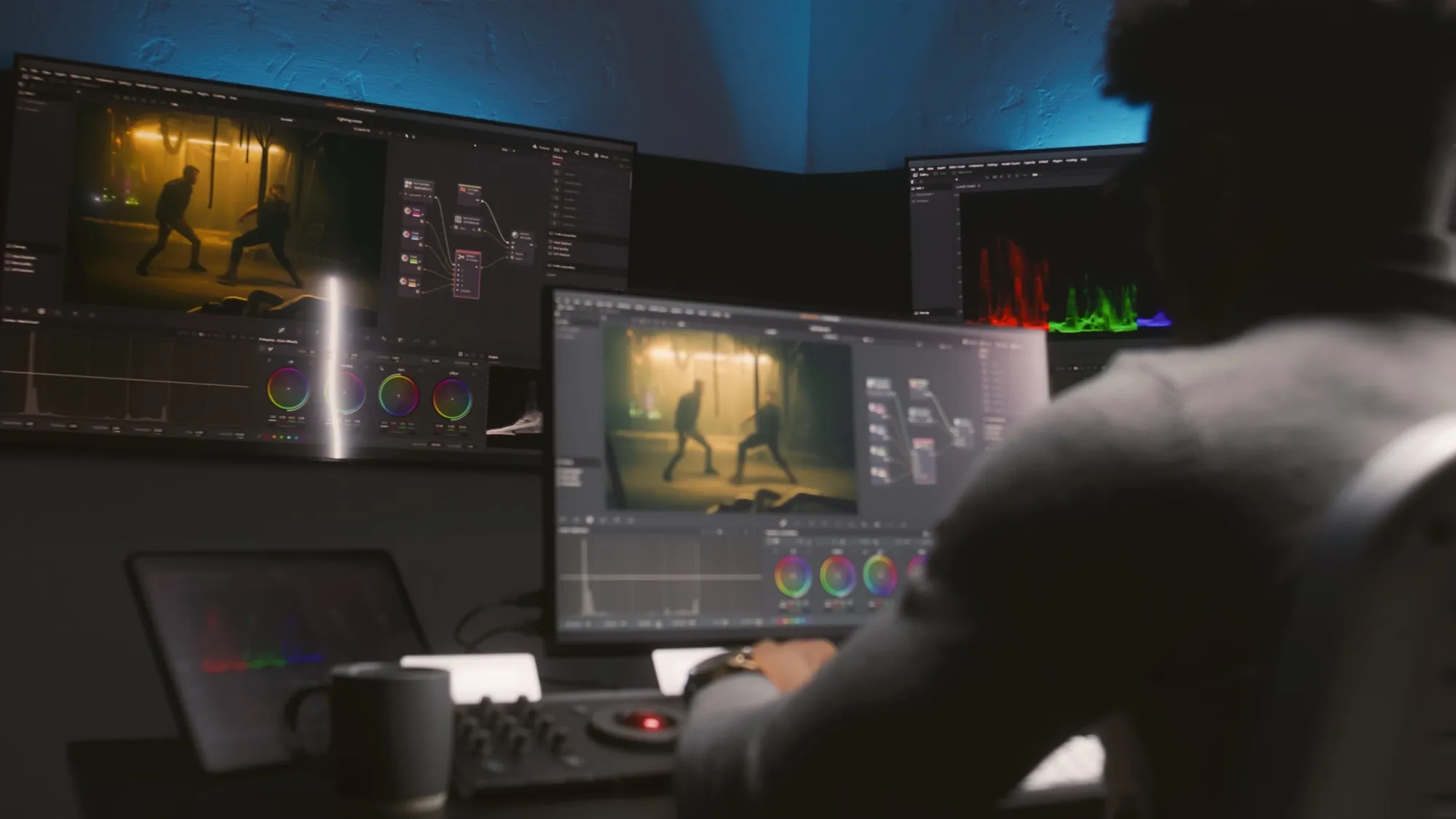
Talent, writing, directing, and that rare ability to turn an image into collective memory are not disappearing. What is under pressure is the giant model built on outsized budgets, long timelines, and production structures accessible only to a few industrial players.
Generative AI does not remove the need for vision, but it reduces the weight of the infrastructure required to make vision visible. Hollywood will probably need to streamline, not dissolve: to operate more like a creative lab than a monumental machine.
Barriers to entry are giving way: an independent author, a small studio, a brand, or an AI-native production house can today prototype narrative worlds, visual atmospheres, and complex sequences at a speed that was previously unthinkable. That does not guarantee quality — if anything, it will make the gap clearer between those with cultural direction and those who produce only synthetic noise.
The decisive point is that creative power no longer automatically coincides with production capital. For decades, the industry controlled not only distribution, but the very possibility of imagining at scale. That possibility is now decentralising.
Hollywood is not dying. It is losing its historical monopoly on spectacle.